IDEA · PHILOSOPHY
Ethical Philosophy
399
The Socratic method laid the groundwork for modern ethical inquiry and philosophical discourse.
399
The Socratic method laid the groundwork for modern ethical inquiry and philosophical discourse.
AI-illustrated · Chronos
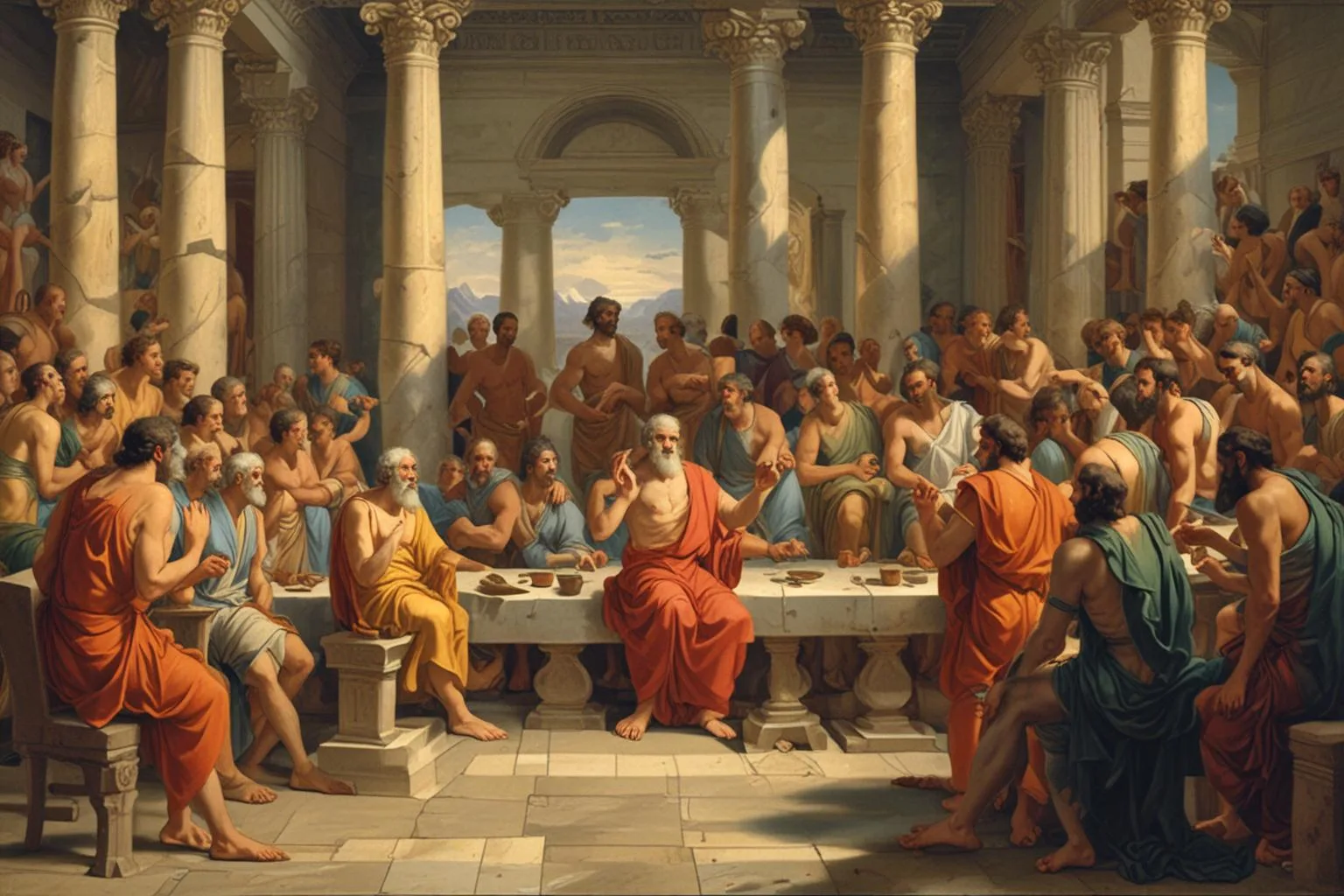
In 399, the air in Athens is thick with tension as Socrates stands before the assembled jury, his calm demeanor contrasting sharply with the clamor of accusations. He accepts the cup of hemlock with a steady hand, his final words echoing the essence of his teachings on virtue and the examined life, as he prepares to embrace death with the same philosophical rigor he applied to life. The sun sets, casting long shadows over the city, marking the end of an era and the profound silence that follows his final breath.
AI-reconstructed · Chronos
Loading…
Sign in to join the discussion.
AI-illustrated · Chronos
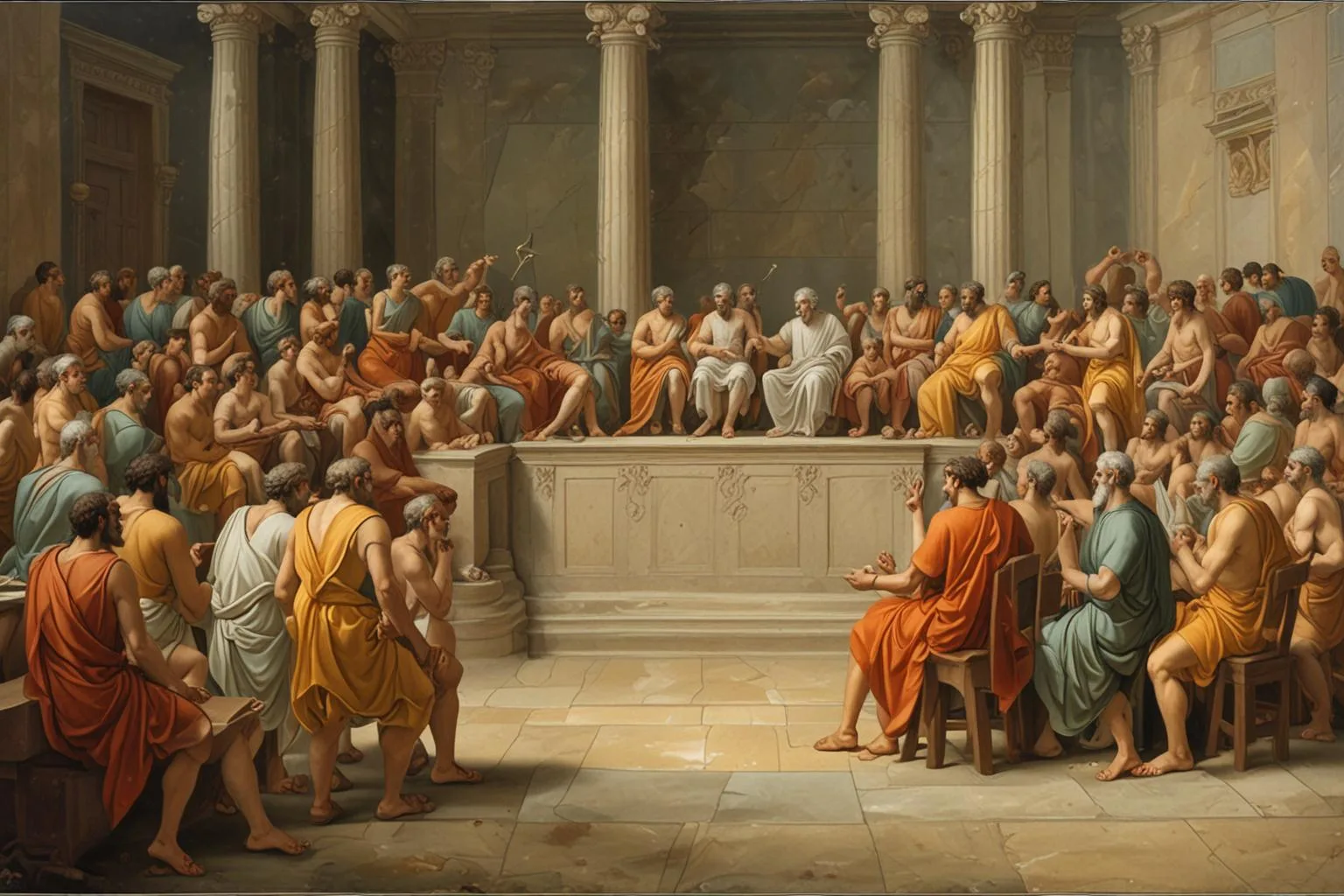
In 399, the sun hangs low over Athens as Socrates stands before the jury, his calm demeanor contrasting with the charged atmosphere. Accused of corrupting the youth and impiety, he defends his philosophy with unwavering conviction, yet the verdict rings out—guilty. As the sentence of death is pronounced, a profound silence envelops the courtroom, marking the end of a life devoted to the pursuit of truth.
AI-reconstructed · Chronos
Loading…
Sign in to join the discussion.
AI-illustrated · Chronos
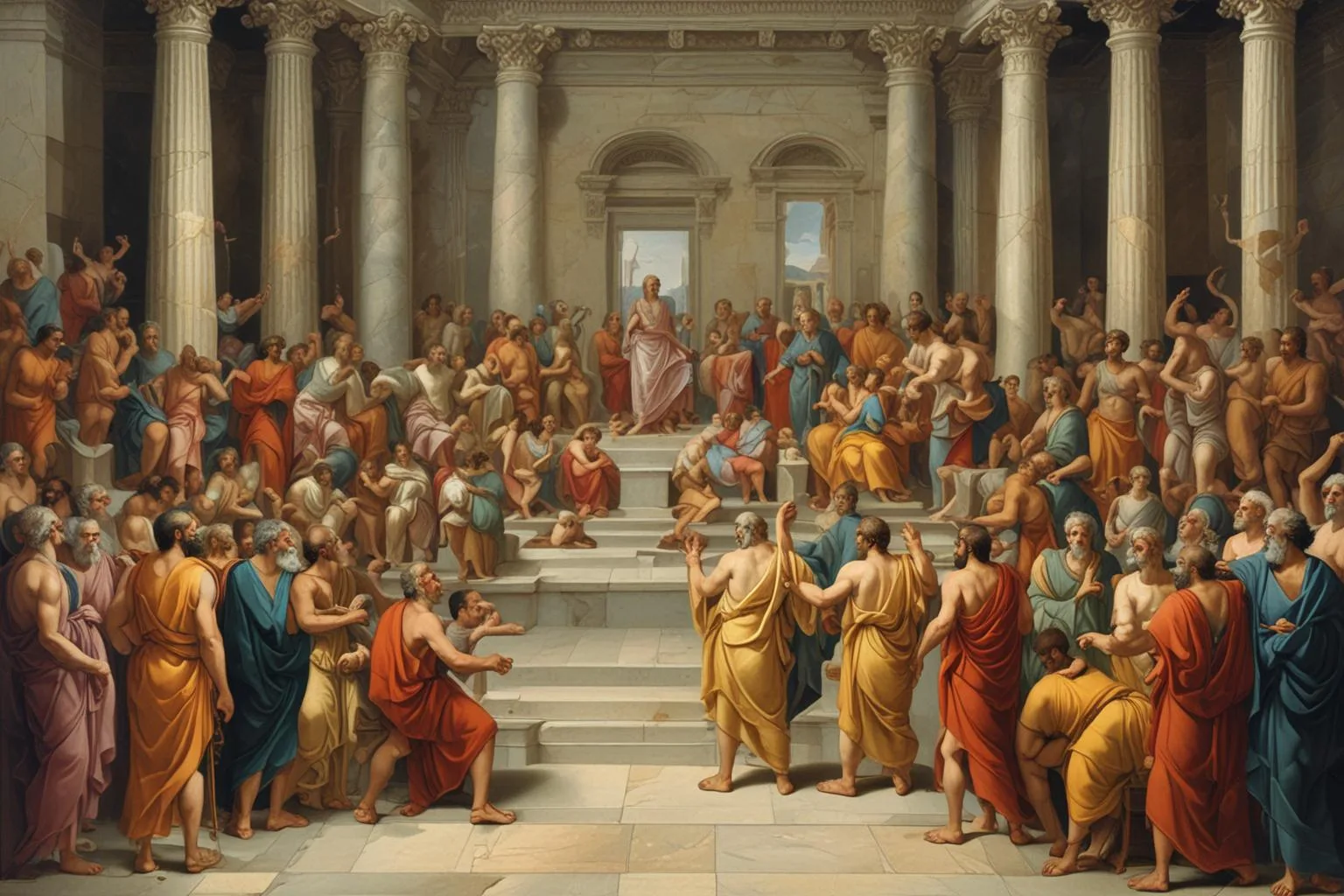
In 399, the sun hangs low over Athens as Socrates stands before a jury of his peers, his unkempt hair framing a face etched with wisdom and defiance. Accused of impiety and corrupting the youth, he calmly defends his life's work, challenging the very foundations of Athenian society while the murmurs of discontent ripple through the crowd. His fate hangs in the balance, a testament to the perilous intersection of philosophy and politics.
AI-reconstructed · Chronos
Loading…
Sign in to join the discussion.

Wikimedia Commons
World context
399Reyer Jacobsz. van Blommendael, Socrate, ses deux épouses et Alcibiade, 1675. Huile sur toile, 210 x 198 cm. Strasbourg, Musée des Beaux-Art

Wikimedia Commons
World context
399Socrates and Alcibiades, Christoffer Wilhelm Eckersberg
Keep exploring