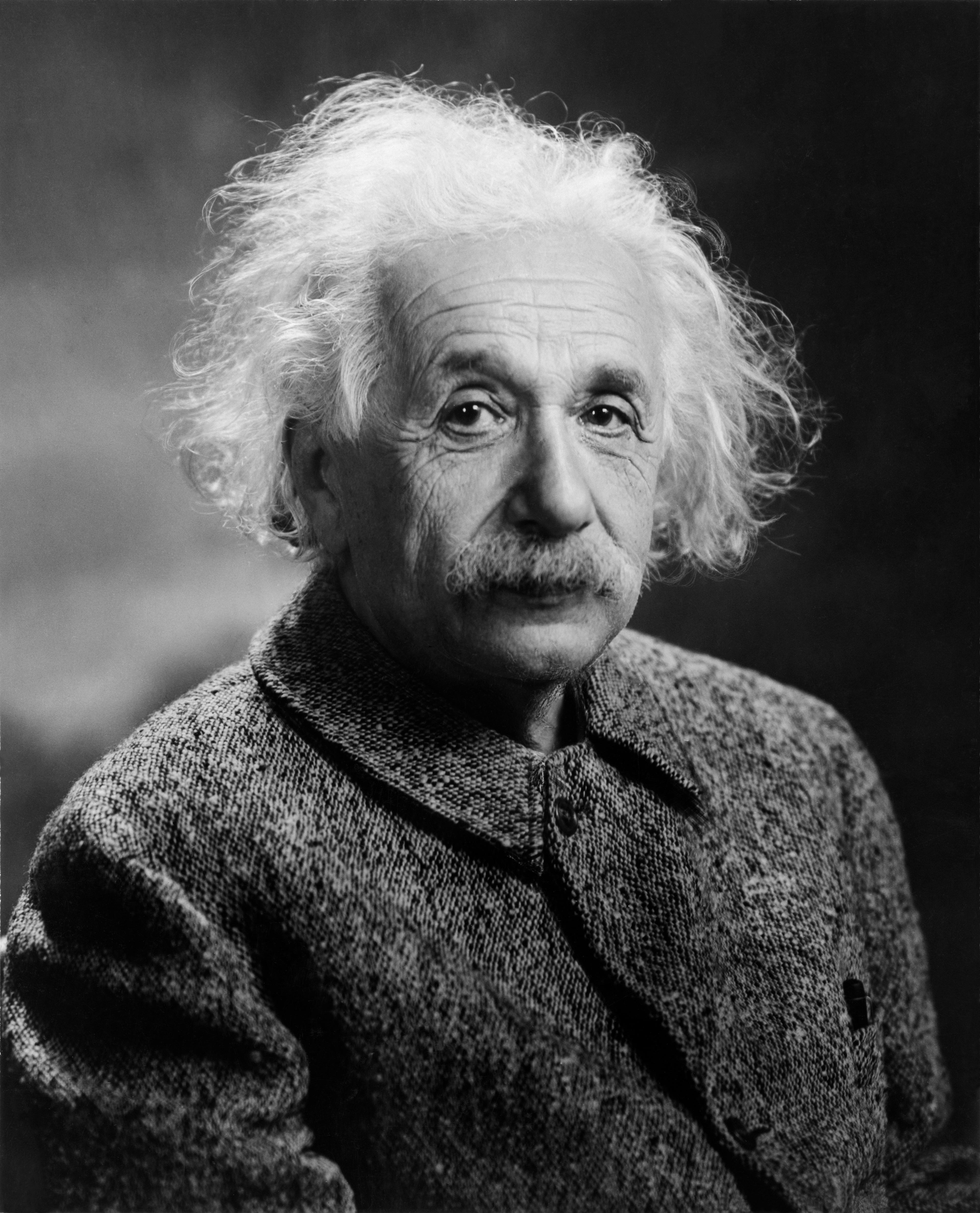
IDEA · PHYSICS
Theory of Relativity
1881 — 1981
It transformed theoretical physics and astronomy, leading to the prediction of phenomena such as black holes and gravitational waves.
1881 — 1981
It transformed theoretical physics and astronomy, leading to the prediction of phenomena such as black holes and gravitational waves.

Wikimedia Commons
World context
1881In 1881, Albert A. Michelson stands in his laboratory, meticulously aligning mirrors and prisms, his breath steady with anticipation. The air hums with the promise of discovery as he prepares to measure the speed of light, aiming to detect the elusive "aether" that was thought to permeate space. As the experiment concludes, the null result reverberates through the scientific community, quietly challenging the very foundations of physics and paving the way for Einstein's revolutionary ideas.

Wikimedia Commons
World context
1887In the chilly January air of 1887, Albert A. Michelson stands in his laboratory, eyes fixed on the intricate apparatus designed to detect the elusive ether. As the final measurements are taken, a hush falls over the room; the results, once again, reveal no trace of the medium that was thought to carry light. The implications of this null result ripple through the scientific community, challenging the very foundations of physics.

Wikimedia Commons
In 1905, Albert Einstein sits at his cluttered desk in Bern, Switzerland, scribbling furiously as he unveils his theory of special relativity. The air is thick with the scent of ink and paper as he boldly asserts that time and space are intertwined, challenging the very fabric of Newtonian physics. With a final flourish, he seals the manuscript, unaware that he is about to revolutionize our understanding of the universe.
AI-reconstructed · Chronos
Loading…
Sign in to join the discussion.

Wikimedia Commons
World context
1905Aleutian Islands with 180th meridian and International Date Line (cropped)
Wikimedia Commons
World context
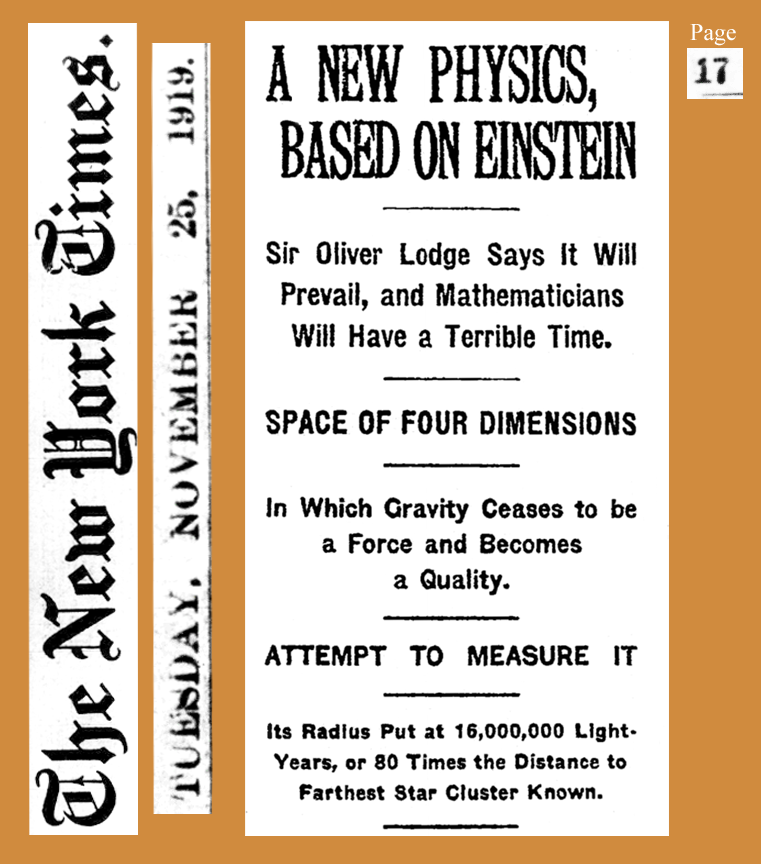
190519191125 A New Physics Based on Einstein - The New York Times

Wikimedia Commons
In January 1915, Albert Einstein sits at his cluttered desk in Berlin, scribbling equations that twist and turn like the fabric of space itself. He pauses, eyes sparkling with revelation, as he realizes that gravity is not merely a force but a curvature of spacetime, reshaping the very understanding of the universe. The air is thick with anticipation, as the world stands on the brink of a new era in physics.
AI-reconstructed · Chronos
Loading…
Sign in to join the discussion.
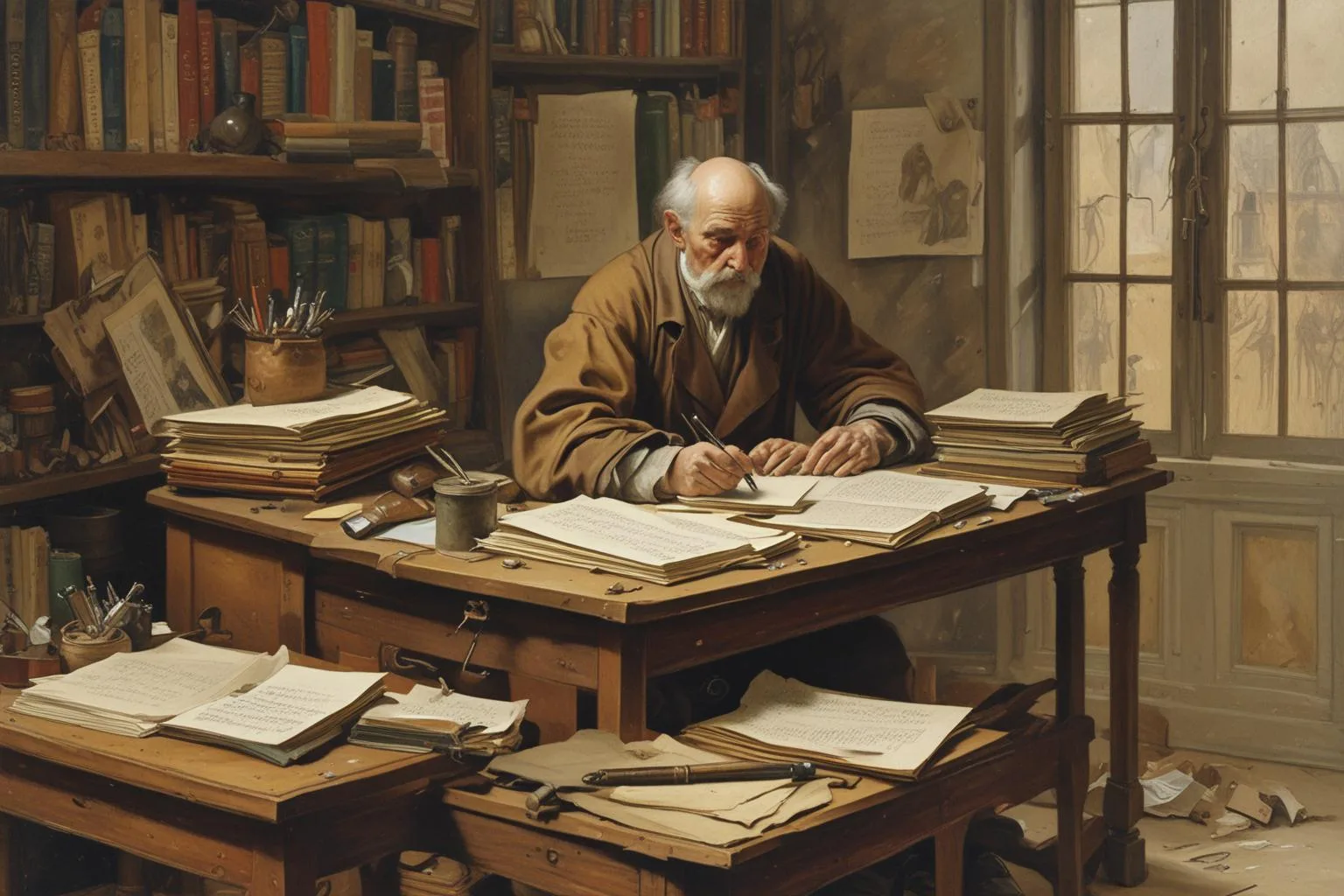
AI-illustrated · Chronos
In January 1915, Albert Einstein sits at his cluttered desk in Berlin, scribbling furiously on sheets of paper, his brow furrowed in concentration. The room is dimly lit, but the spark of genius illuminates his thoughts as he formulates the Einstein field equations, weaving together the fabric of spacetime and gravity. With each equation, he edges closer to a revolutionary understanding of the universe, a moment that will forever alter the course of physics.
AI-reconstructed · Chronos
Loading…
Sign in to join the discussion.

Wikimedia Commons
In January 1916, Albert Einstein sits in his cluttered study in Berlin, the scent of ink and paper filling the air as he meticulously finalizes the manuscript that will redefine physics. With a flourish, he inscribes the last equations of his general theory of relativity, a revolutionary framework that describes gravity not as a force, but as the curvature of spacetime itself. Outside, the bustling city continues its routine, unaware that a new era of understanding the universe is about to unfold.
AI-reconstructed · Chronos
Loading…
Sign in to join the discussion.
World context
1932In the crisp air of January 1, 1932, Roy Kennedy stands beside a massive apparatus at the University of California, Berkeley, his heart racing with anticipation. As he initiates the Kennedy–Thorndike experiment, beams of light race through the apparatus, confirming the principles of special relativity and reshaping the understanding of time and space. The room buzzes with excitement as the implications of Einstein's theories begin to crystallize in the minds of the gathered physicists.
World context
1938In the crisp air of January 1, 1938, Herbert Ives stands in the dimly lit laboratory, adjusting the intricate apparatus designed to measure the transverse Doppler effect. As he peers through the lens, the hum of machinery fills the room, and the flickering lights cast shadows on the walls, embodying the tension of a groundbreaking moment in physics that seeks to validate Einstein's revolutionary ideas. The world outside remains oblivious, but within these walls, the fabric of space and time is about to be tested.

Wikimedia Commons
World context
1941In January 1941, Herbert Ives stands in a dimly lit laboratory, adjusting the delicate apparatus for the Ives–Stilwell experiment. As the beam of light splits and races toward its target, he feels a thrill of anticipation; this moment could confirm the elegant predictions of Einstein's theory of special relativity. With each precise measurement, the air crackles with the promise of scientific revelation, as the results align perfectly with the theory, solidifying the foundations of modern physics.

Wikimedia Commons
World context
1960In 1960, a group of physicists gathers in a dimly lit conference room, their faces illuminated by the flickering light of overhead bulbs. They passionately debate the implications of Einstein's General Relativity, its equations sprawling across chalkboards, reshaping their understanding of gravity and the cosmos. As they discuss the bending of light around massive objects, a sense of awe fills the air—this theory is no longer just a concept; it is becoming the cornerstone of modern physics and astronomy.
World context
1963In January 1963, astronomers peer through powerful telescopes, their breath held as they observe an enigmatic light flickering from the depths of space. This radiant phenomenon, later named a quasar, defies conventional understanding, yet the equations of general relativity begin to weave a tapestry of explanation, hinting at the vast energies and distances involved. The universe, in its unfathomable complexity, reveals a new chapter, igniting a fervor of curiosity among physicists and stargazers alike.
World context
1965In January 1965, a team of physicists huddles around their equipment, the hum of machinery punctuating the air as they analyze the faint signals of microwave background radiation. The data reveals a cosmic echo, a remnant from the Big Bang, confirming the predictions of general relativity and reshaping humanity's understanding of the universe. Excitement crackles in the room as they realize they are on the brink of a monumental discovery.
World context
1967In January 1967, a young astrophysicist at Cambridge University stares intently at the blips on his oscilloscope, each pulse echoing the rhythmic heartbeat of a distant neutron star. The discovery of pulsars, a phenomenon that aligns perfectly with Einstein's theory of general relativity, sends ripples through the scientific community, igniting fervent discussions about the nature of the universe. Excitement crackles in the air as the implications of this cosmic clockwork unfold, reshaping humanity's understanding of time and space.

Wikimedia Commons
World context
1981In 1981, physicists gather around chalkboards cluttered with equations, their excitement palpable as they identify the first black hole candidates, a breakthrough supported by Einstein's general relativity. The air buzzes with the thrill of possibility, as they peer into the depths of the cosmos, contemplating the unseen forces that shape the universe. Each scribbled formula brings them closer to understanding the enigmatic nature of these celestial giants.
Keep exploring