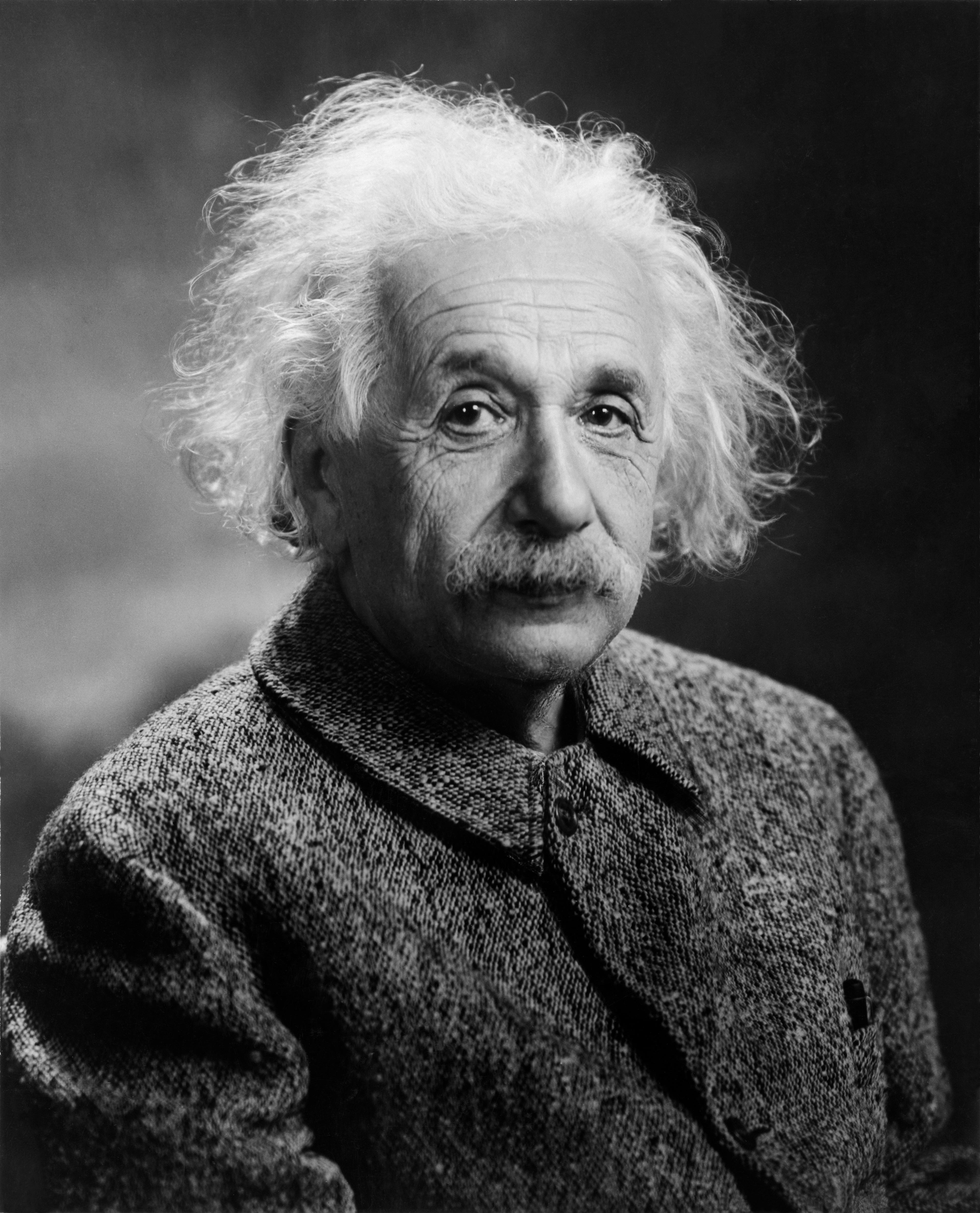
COLLABORATION · PHYSICS
Quantum Theory Contributions
1900 — 1964
Quantum mechanics revolutionized our understanding of the physical universe.
1900 — 1964
Quantum mechanics revolutionized our understanding of the physical universe.

Wikimedia Commons
World context
1900In 1900, Max Planck stands before a gathering of scientists in Berlin, his heart racing as he unveils a revolutionary idea. He proposes that energy is not continuous but quantized, introducing the concept of energy quanta to solve the perplexing black-body radiation problem. The room buzzes with disbelief and intrigue, marking the dawn of quantum theory.
Wikimedia Commons
World context
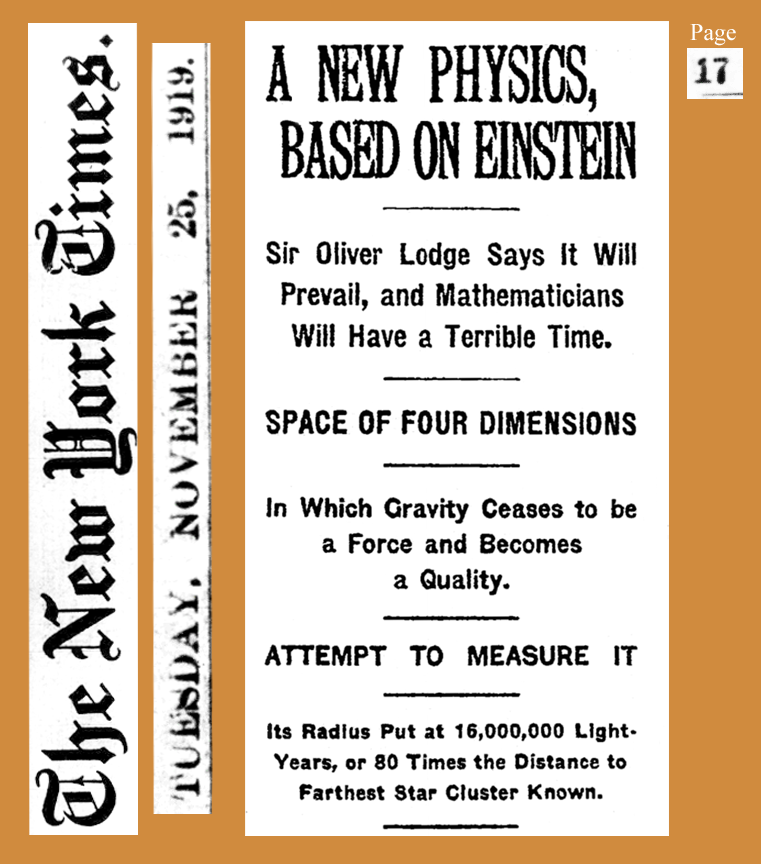
190019191125 A New Physics Based on Einstein - The New York Times

Wikimedia Commons
World context
1900Albert Einstein's exam of maturity grades (color2)

Wikipedia / Wikimedia Commons
In January 1905, Albert Einstein sits in a modest Swiss patent office, pen poised over paper, as he meticulously outlines his groundbreaking theory of the photoelectric effect. The ink flows as he describes how light can behave as both a wave and a particle, challenging the very foundations of classical physics. With each word, he inches closer to unraveling the mysteries of quantum theory, forever altering our understanding of light.
AI-reconstructed · Chronos
Loading…
Sign in to join the discussion.
World context
1920In 1920, Niels Bohr stands before a blackboard, chalk in hand, as he meticulously sketches the orbits of electrons around the nucleus, each line representing a revolutionary idea that will reshape the understanding of the atomic world. The air crackles with excitement and uncertainty as he and his colleagues debate the implications of wave-particle duality, their voices echoing in the dimly lit room, a crucible of modern physics. Each equation they write is a step into the unknown, laying the groundwork for a new era of scientific thought.
World context
1920In 1920, Erwin Schrödinger stands in his cluttered study in Vienna, scribbling equations that dance across the pages like the very particles he seeks to understand. The air is thick with the scent of ink and tobacco as he contemplates the wave-particle duality, envisioning a revolutionary framework that will forever alter the landscape of physics. Each stroke of his pen brings him closer to a new reality, where uncertainty reigns and the quantum world unfolds its mysterious secrets.
World context
1920In 1920, Werner Heisenberg stands in a dimly lit laboratory in Göttingen, scribbling equations that will challenge the very foundations of classical physics. The air is thick with anticipation as he grapples with the uncertainty principle, a radical idea that suggests particles do not have precise positions and velocities simultaneously. Each stroke of his pencil brings him closer to a new understanding of the atomic world, forever altering the landscape of science.
World context
1920In 1920, Max Born stands in his Göttingen office, surrounded by chalkboards filled with equations and diagrams. With a flick of his wrist, he writes down the probabilistic interpretation of wave functions, a radical departure from classical physics, igniting a revolution in quantum mechanics. The air buzzes with the excitement of possibility as he ponders the implications of his work, forever altering the landscape of science.
World context
1920In 1920, Paul Dirac sits at his cluttered desk in Cambridge, scribbling equations that dance across the page like particles in a quantum field. His mind races as he contemplates the strange behavior of electrons, crafting a mathematical framework that will soon challenge the very foundations of classical physics. The air is thick with possibility, as the young physicist edges closer to a revolutionary understanding of the universe.
World context
1935In January 1935, Erwin Schrödinger stands in his dimly lit study, scribbling furiously on a piece of paper. He coins the term "entanglement," capturing the eerie connection between particles that seem to defy the boundaries of space and time. The air crackles with the promise of a new understanding of the quantum world, as Schrödinger's ideas challenge the very fabric of reality itself.
World context
1964In January 1964, John Bell stands in his modest office at CERN, scribbling equations on a chalkboard, his brow furrowed in concentration. He proposes a groundbreaking theorem, challenging the very foundations of quantum mechanics and local hidden variable theories, igniting a fierce debate among physicists that will reverberate through the decades. The air is thick with anticipation as Bell's ideas promise to unravel the mysteries of the quantum world.
Keep exploring