
IDEA · CHEMISTRY
Contributions to Electrochemistry
1560 — 1949
Electrochemistry revolutionized energy storage and conversion technologies.
1560 — 1949
Electrochemistry revolutionized energy storage and conversion technologies.
World context
1560In 1560, William Gilbert stands in his dimly lit study, surrounded by an array of lodestones and amber. He rubs the amber with a cloth, watching in fascination as it attracts small bits of straw, igniting a spark of curiosity that will lead him to unravel the mysteries of magnetism and electricity. Each experiment draws him deeper into the unseen forces that govern the natural world, setting the stage for a revolution in science.

Wikimedia Commons
World context
1663In 1663, Otto von Guericke stands in his dimly lit workshop, meticulously assembling a glass sphere, its surface polished to a gleam. As he cranks the handle, a crackling sound fills the air, and sparks leap from the sphere, illuminating his face with a flickering glow. This moment marks the birth of the first electric generator, a groundbreaking leap into the realm of electrochemistry.
World context
1733In January 1733, Charles François de Cisternay du Fay stands in his dimly lit laboratory, surrounded by glass jars and bits of amber. With a spark of curiosity, he rubs a piece of glass and a piece of resin, marveling as they attract and repel each other, revealing the dual nature of static electricity. His meticulous observations lay the groundwork for a deeper understanding of electrochemistry, igniting a revolution in the study of electrical phenomena.
World context
1785In 1785, Charles-Augustin de Coulomb stands in his dimly lit laboratory, meticulously adjusting the delicate apparatus before him. With a steady hand, he measures the forces between charged objects, his mind racing as he formulates the law of electrostatic attraction, a breakthrough that will illuminate the invisible forces binding the universe. The air crackles with potential, echoing the revolutionary ideas that will soon reshape the field of electrochemistry.

Wikimedia Commons
World context
1791In 1791, Luigi Galvani stands in his dimly lit laboratory, the air thick with the scent of copper and damp earth. He carefully dissects a frog's leg, its muscles twitching unexpectedly as he applies a spark of electricity, igniting a revelation that links chemical reactions to the mysterious force of electricity. With ink-stained fingers, he pens his groundbreaking essay, forever altering the landscape of electrochemistry.
World context
1800In 1800, William Nicholson and Johann Wilhelm Ritter stand before a glass apparatus, their eyes alight with discovery as electric currents dance through water. Bubbles form and rise, the hydrogen and oxygen separating in a mesmerizing display, marking a pivotal moment in electrochemistry that will forever alter the understanding of chemical processes. The air crackles with the promise of innovation, as the duo unlocks the secrets of the elements.

Wikimedia Commons
World context
1808In the dim light of his laboratory in 1808, Sir Humphry Davy stands before a crackling apparatus, the air thick with anticipation. With a spark of electricity, he separates sodium and potassium from their compounds, unveiling two gleaming metals that shimmer with potential. The room hums with the energy of discovery, as Davy realizes he has opened a new chapter in the realm of chemistry.
World context
1820In 1820, Hans Christian Ørsted stands before a classroom in Copenhagen, his heart racing with excitement as he connects a wire to a battery. As the current flows, he watches in awe as a nearby compass needle twitches, defying its usual stillness, revealing the magnetic effect of electric currents for the first time. This moment ignites a new understanding of the interplay between electricity and magnetism, forever altering the landscape of electrochemistry.
AI-illustrated · Chronos
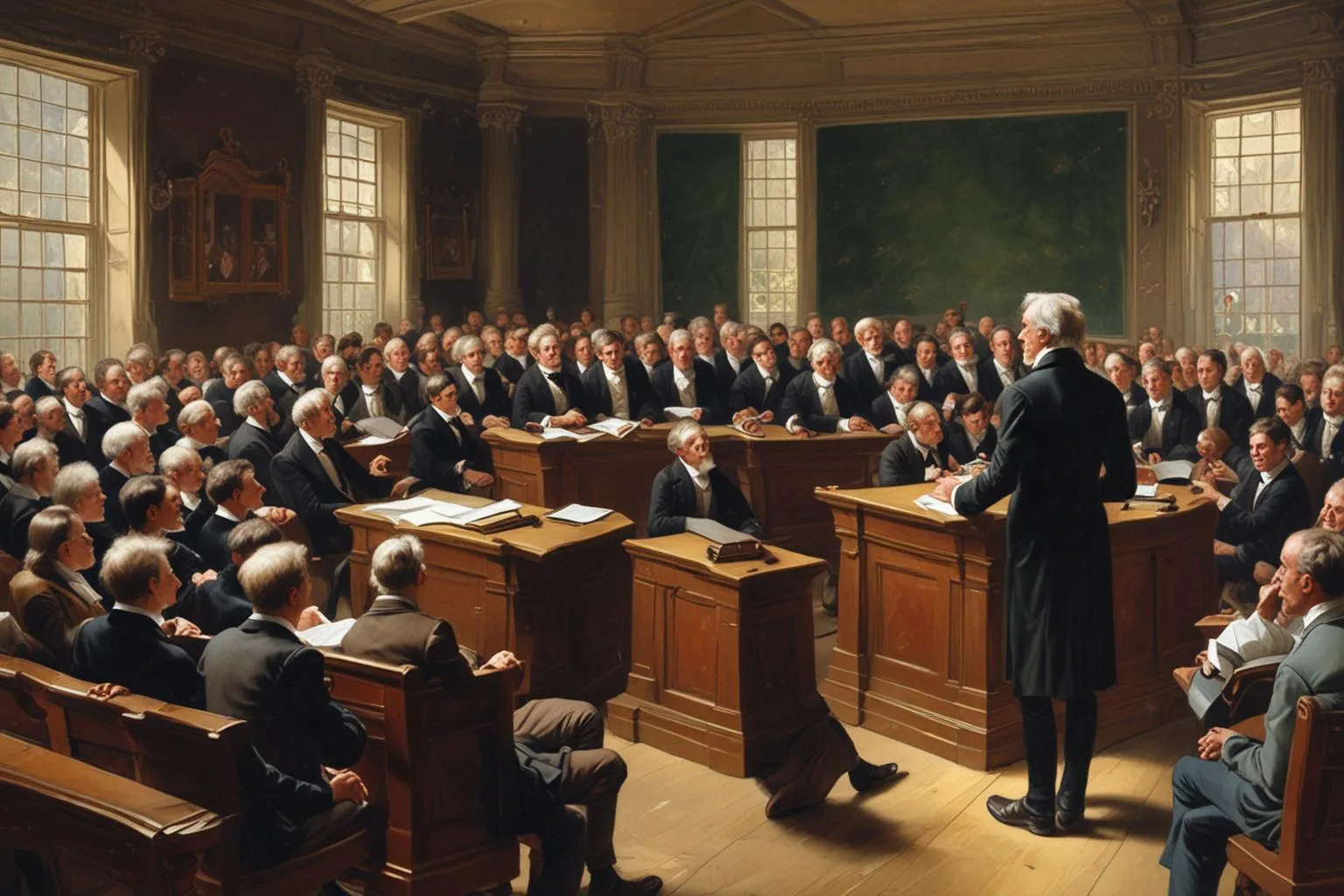
In 1832, Michael Faraday stands before an eager audience, his voice steady as he articulates the two laws of electrochemistry. The air crackles with anticipation as he explains how electric current can decompose chemical compounds, illuminating the profound connection between electricity and chemistry. Each word resonates with the promise of a new scientific era, forever altering the landscape of both fields.
AI-reconstructed · Chronos
Loading…
Sign in to join the discussion.
World context
1839In 1839, William Grove stands in his dimly lit laboratory, surrounded by glass beakers and copper wires. With a spark of inspiration, he connects two electrodes to a solution of sulfuric acid and platinum, watching as hydrogen and oxygen dance together, producing electricity and water. This moment marks the birth of the fuel cell, a revolutionary step in the realm of electrochemistry.

Wikimedia Commons
World context
1884In 1884, Svante Arrhenius stands in his modest Stockholm study, ink-stained fingers poised over his manuscript. He meticulously details his groundbreaking thesis on the conductivity of electrolytes, illuminating the intricate dance of ions in solution. The air is thick with the scent of fresh paper and ambition, as he prepares to challenge the very foundations of physical chemistry.
World context
1886In January 1886, Paul Héroult and Charles M. Hall stand side by side in their makeshift laboratories, the air thick with anticipation. As they immerse graphite electrodes in molten cryolite, a brilliant arc of electricity ignites, revealing the shimmering potential of aluminum. This moment marks the dawn of a revolutionary method, forever changing the landscape of metallurgy and industry.
World context
1902In 1902, a group of passionate chemists gathers in a dimly lit room, their faces illuminated by the flickering gas lamps. They share fervent discussions about the mysteries of electricity and chemical reactions, united by a vision to advance their field. As they sign the founding charter of the Electrochemical Society, the air buzzes with the promise of innovation that will electrify the world of science.
World context
1909In 1909, Robert Andrews Millikan stands before a carefully constructed apparatus, his eyes fixed on the tiny oil droplets suspended in the chamber. With a flick of a switch, he adjusts the electric field, watching intently as the droplets dance, revealing the elusive charge of a single electron. Each measurement brings him closer to unraveling one of nature's fundamental mysteries, a pivotal moment in the realm of electrochemistry.
World context
1911In the crisp air of January 1, 1911, Harvey Fletcher stands in his laboratory, eyes fixed on the delicate apparatus before him. With a steady hand, he adjusts the electrodes, feeling the weight of anticipation as he prepares to measure the charge of the electron, a feat that will illuminate the very fabric of atomic theory. The moment the readings stabilize, a spark of realization ignites within him—he is on the brink of a groundbreaking discovery that will reshape the field of electrochemistry.
World context
1949In a dimly lit conference room in Paris, 1949, a group of passionate scientists gathers around a worn wooden table, their voices a blend of excitement and determination. They draft the founding charter of the International Society of Electrochemistry, envisioning a future where their collective knowledge could spark innovations in energy storage and corrosion prevention. As they sign their names, the air crackles with the promise of collaboration and discovery.
Keep exploring