INVENTION JOURNEY · ENGINEERING
Invention of the Phonograph
1857 — 1888
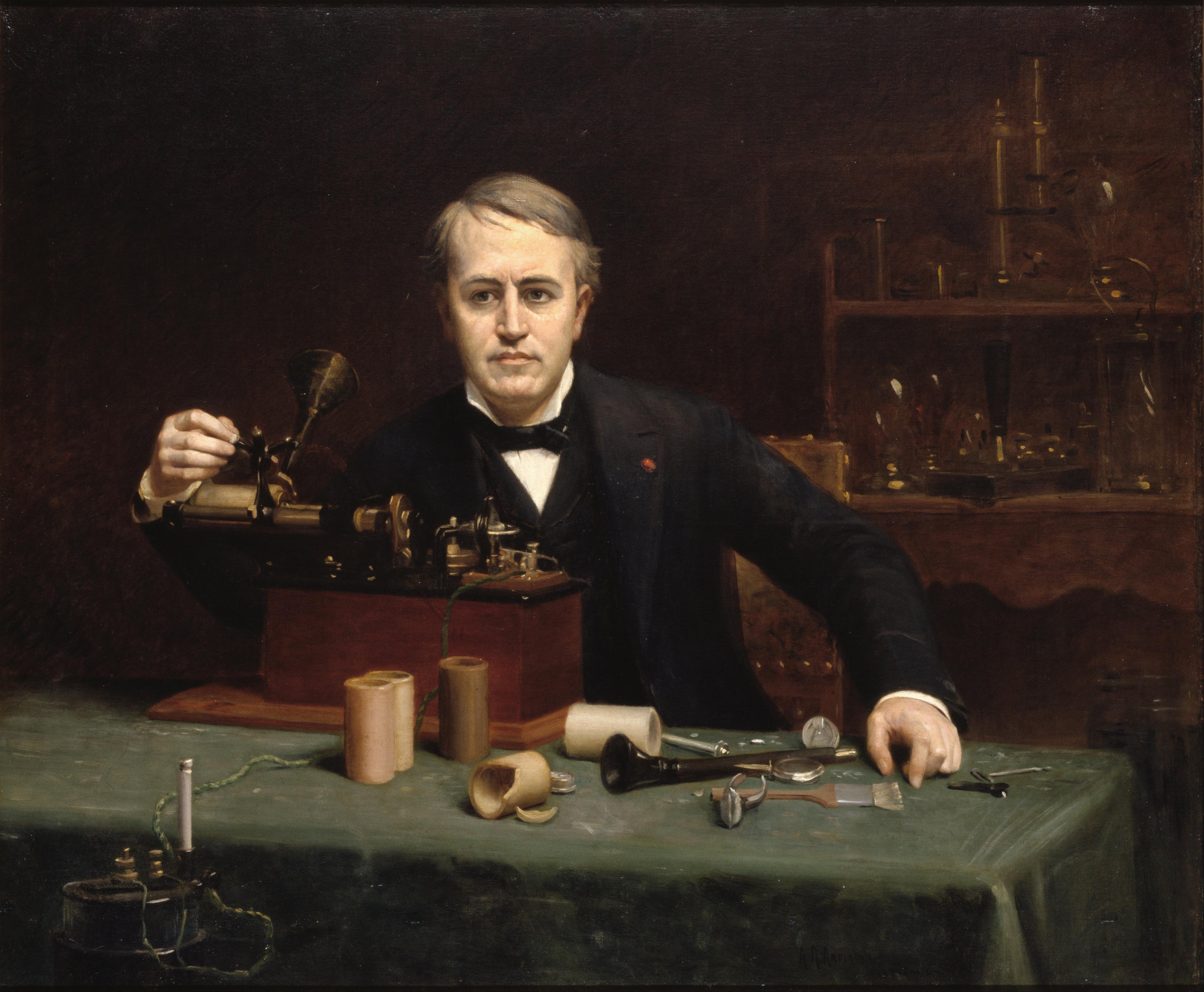
The phonograph revolutionized the way sound was recorded and played back, laying the foundation for modern audio technology.
1857 — 1888
The phonograph revolutionized the way sound was recorded and played back, laying the foundation for modern audio technology.

Wikimedia Commons
World context
Mar 25, 1857On March 25, 1857, in a dimly lit Paris workshop, Édouard-Léon Scott de Martinville carefully adjusts the delicate diaphragm of his phonautograph. As he speaks into the device, a series of vibrations etch sound waves onto a soot-coated cylinder, capturing the human voice for the first time. This moment marks a pivotal leap in the quest to record sound, igniting a revolution in auditory history.

Wikimedia Commons
World context
Mar 25, 1857'I Ear' Audio Show 2019 31 Yamaha Turntable and Jelco tonearm

Wikimedia Commons
World context
Mar 25, 1857Drawing for a Phonograph - NARA - 595515 (cropped)
World context
Apr 9, 1860On April 9, 1860, Édouard-Léon Scott de Martinville carefully positions his phonautograph, the air thick with anticipation. He captures the delicate notes of a voice singing "Au Clair de la Lune," the vibrations etched onto a soot-covered cylinder, forever preserving a fleeting moment in sound. This groundbreaking recording marks the dawn of a new era in auditory history.

Wikimedia Commons
World context
Apr 30, 1877On April 30, 1877, Charles Cros stands in the dimly lit halls of the French Academy of Sciences, his heart racing as he carefully seals an envelope containing his revolutionary ideas for sound reproduction. The crisp paper, filled with sketches and theories, promises to unlock the secrets of capturing voices and music, a dream that dances tantalizingly close to reality. With a final glance at the bustling scientists around him, he deposits the envelope, a silent witness to the dawn of a new era in engineering.
AI-illustrated · Chronos
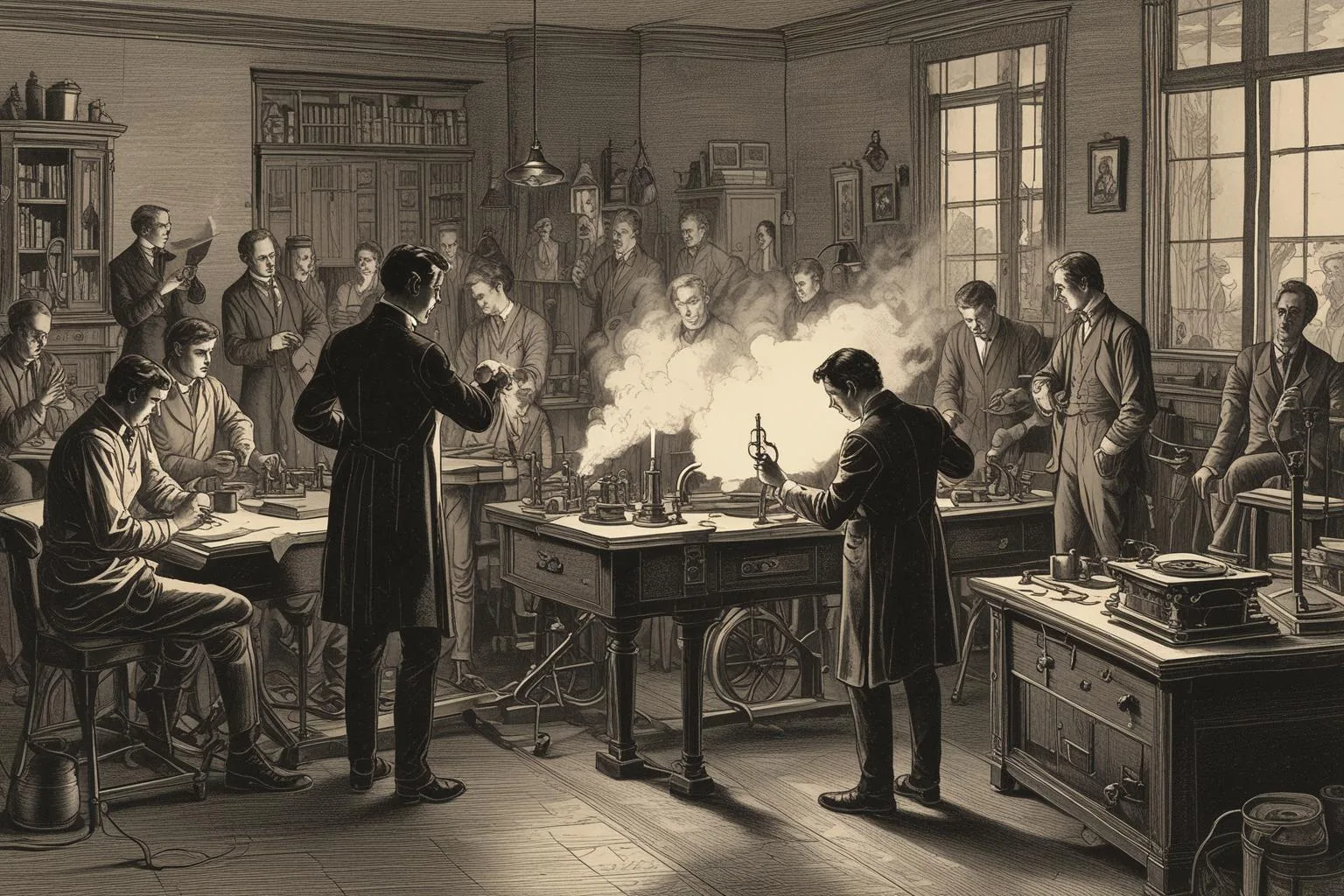
On November 21, 1877, in a dimly lit workshop in Menlo Park, New Jersey, Thomas Edison triumphantly unveils the phonograph, a curious device that captures sound on tinfoil cylinders. As he cranks the handle, the room fills with the crackling voice of a recorded song, leaving his audience spellbound, their faces illuminated by the flickering gaslight. This moment marks the dawn of a new era, where the echoes of the past can be played back, forever altering the way humanity experiences sound.
AI-reconstructed · Chronos
Loading…
Sign in to join the discussion.

Wikipedia / Wikimedia Commons
On November 29, 1877, in a dimly lit workshop in Menlo Park, Thomas Edison cranks the handle of his newly invented phonograph. The room fills with the crackling sound of a voice, a recording of “Mary had a little lamb,” echoing off the walls, as astonished onlookers lean in, their faces a mix of disbelief and wonder. This moment marks the dawn of sound recording, forever changing the way humanity experiences music and speech.
AI-reconstructed · Chronos
Loading…
Sign in to join the discussion.
Wikimedia Commons
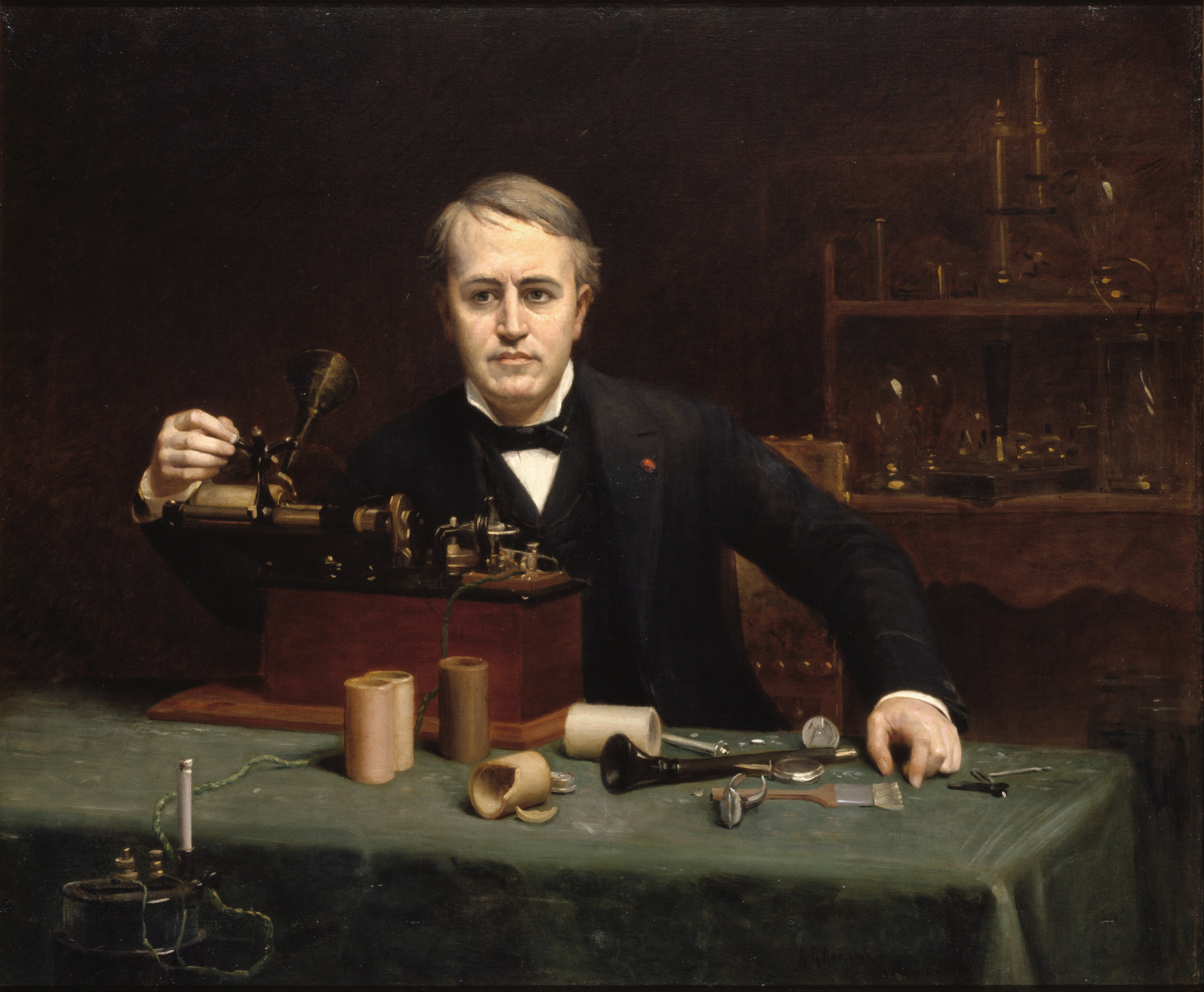
On February 19, 1878, Thomas Edison stands in his workshop, the air thick with the scent of hot metal and ambition. He clutches US Patent 200,521, the document that grants him ownership of the phonograph, a device that captures sound and promises to change the way people experience music and voice forever. The rhythmic clicking of the machine echoes in the background, a harbinger of a new era in communication and entertainment.
AI-reconstructed · Chronos
Loading…
Sign in to join the discussion.
World context
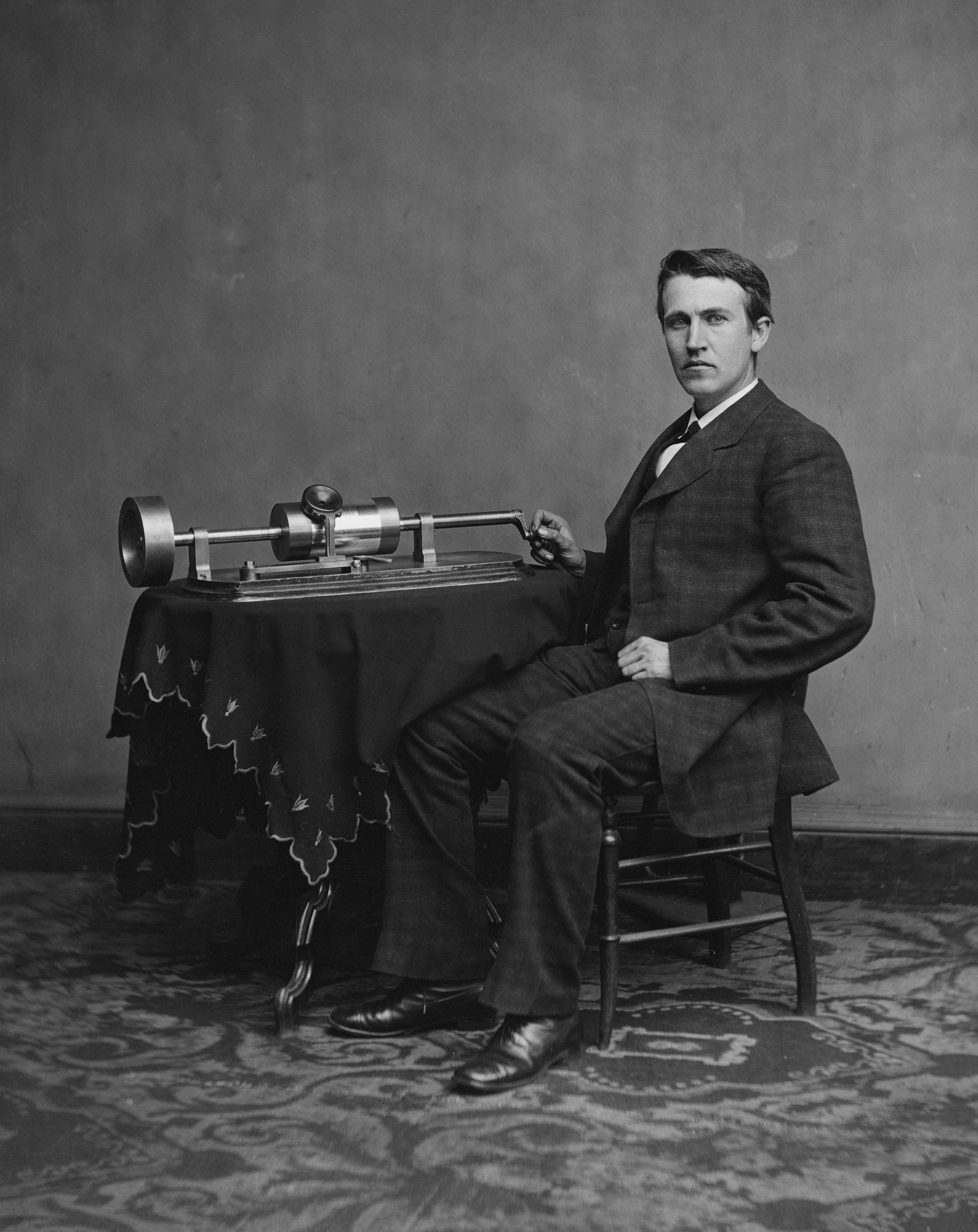
Jun 14, 1878On June 14, 1878, in the grand hall of the Royal Society of Victoria, Alex Sutherland unveils the phonograph, its brass horn gleaming under the gaslight. The audience leans forward, breathless, as the machine crackles to life, capturing the sound of Sutherland's voice reciting a verse, the first whispers of recorded sound echoing through the room. Gasps of astonishment ripple through the crowd, marking a pivotal moment in engineering and the dawn of a new era in sound.
Wikimedia Commons
World context
Aug 8, 1878On August 8, 1878, in the bustling halls of the Society's annual conversazione in Australia, Alex Sutherland stands before an eager crowd, cranking the handle of a curious contraption. As the phonograph whirs to life, the air fills with the crackling voice of a recorded song, leaving spectators in stunned silence, their imaginations ignited by the promise of sound captured and replayed. The marvel of engineering unfolds, marking a pivotal moment in the history of audio technology.
World context
1888On January 1, 1888, the Parisian streets are cloaked in winter fog as Charles Cros, the visionary engineer, takes his final breath at the age of 45. His mind, a wellspring of innovation, has already conceived the idea of the phonograph, a device that will soon capture the ephemeral sounds of life, forever altering the way humanity interacts with sound. In the quiet of his workshop, the echoes of his genius linger, waiting to be unleashed upon the world.
Keep exploring