INVENTION JOURNEY · ENGINEERING
Invention of the Incandescent Light Bulb
1761 — 1889
The incandescent light bulb transformed lighting, paving the way for widespread electrical use.
1761 — 1889
The incandescent light bulb transformed lighting, paving the way for widespread electrical use.
World context
1761In 1761, Ebenezer Kinnersley stands before a captivated audience, his hands steady as he connects a thin wire to a battery. The room fills with gasps as the wire glows a brilliant white, illuminating the dark corners with an otherworldly light, a precursor to the incandescent bulb that will one day transform the world.

Wikimedia Commons
World context
1761Spectral power distribution of a 25 W incandescent light bulb

Wikimedia Commons
World context
1761Various lighting spectrums - Flurescent incandescent diode and candle
World context
1802In the dimly lit laboratory of the Royal Institution in 1802, Humphry Davy stands before a curious audience, his hands steady as he connects a thin strip of platinum to a powerful battery. A brilliant glow erupts, illuminating the room with an ethereal light as the metal glows incandescent, revealing the potential of electric illumination. The air buzzes with excitement, the dawn of a new era in engineering flickering to life.
World context
1835In 1835, James Bowman Lindsay stands before a captivated audience in Dundee, Scotland, as he unveils his remarkable invention: a constant electric light. The room buzzes with excitement as the soft glow illuminates faces, casting a new vision of possibility for the future. Spectators lean forward, their eyes wide, as they witness the dawn of an era where darkness can be tamed by the flicker of electricity.
World context
1838In 1838, Marcellin Jobard stands in his dimly lit workshop, the air thick with anticipation. He carefully adjusts the carbon filament within a glass bulb, expelling the air to create a vacuum atmosphere. With a flick of the switch, a warm glow illuminates the room, heralding a new era of artificial light.
World context
1840In 1840, Warren De la Rue carefully encloses a coiled platinum filament within a glass vacuum tube, the air sucked out to create an almost ethereal silence. As he passes an electric current through the filament, it glows with a fierce, white light, illuminating the dim workshop and hinting at a future where darkness can be banished by the flick of a switch.
World context
1841In 1841, Frederick de Moleyns stands in his workshop, the flickering light of a gas lamp casting shadows on the walls as he meticulously adjusts his latest invention. With a flourish, he submits his patent for an incandescent lamp, its platinum wires glowing faintly with promise, heralding a new era of illumination that will soon banish the darkness from homes and streets alike.
World context
1845In 1845, John W. Starr stands in his dimly lit workshop, a flickering flame casting shadows on the walls as he carefully adjusts his latest creation. With a steady hand, he inserts carbon filaments into a glass bulb, envisioning a future where darkness yields to light. As he completes the assembly, a spark ignites not just the bulb, but the dawn of a new era in illumination.
World context
1851In the crisp air of January 1, 1851, Jean Eugène Robert-Houdin stands before an eager crowd on his estate in Blois, France, the flickering glow of incandescent light bulbs illuminating his workshop. With a deft flick of his wrist, he ignites the bulbs, casting a warm, ethereal light that dances across the faces of astonished spectators, marking a pivotal moment in the dawn of electric illumination. The crowd gasps, captivated by the magic of science manifesting before their eyes.
World context
1859In 1859, Moses G. Farmer stands in his dimly lit workshop, the air thick with anticipation. With steady hands, he connects a platinum filament to a battery, and as he completes the circuit, a soft glow emanates from the bulb, illuminating the shadows around him. This moment marks a pivotal step toward harnessing electricity to light the world.
World context
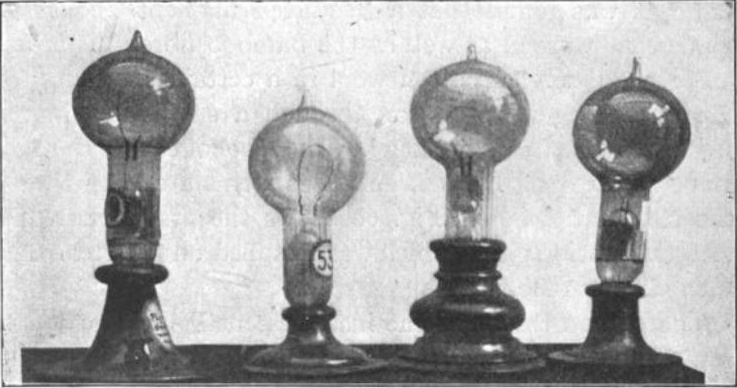
1872In 1872, Alexander Lodygin stands in his dimly lit workshop in St. Petersburg, meticulously adjusting the filament of his newly designed incandescent light bulb. With a flick of the switch, a warm glow fills the room, illuminating the faces of astonished onlookers as he secures his Russian patent, marking a pivotal moment in the quest for electric light. The air buzzes with excitement, the promise of a brighter future hanging palpably in the atmosphere.
Wikimedia Commons
World context
Jul 24, 1874On July 24, 1874, in a modest workshop in Toronto, Henry Woodward and Mathew Evans carefully file their patent for an innovative lamp, featuring carbon rods encased in a nitrogen-filled glass cylinder. The air is thick with the scent of heated metal and ambition as they envision a future illuminated by their creation, a precursor to the incandescent light bulb that will soon transform the world.
Wikimedia Commons
World context
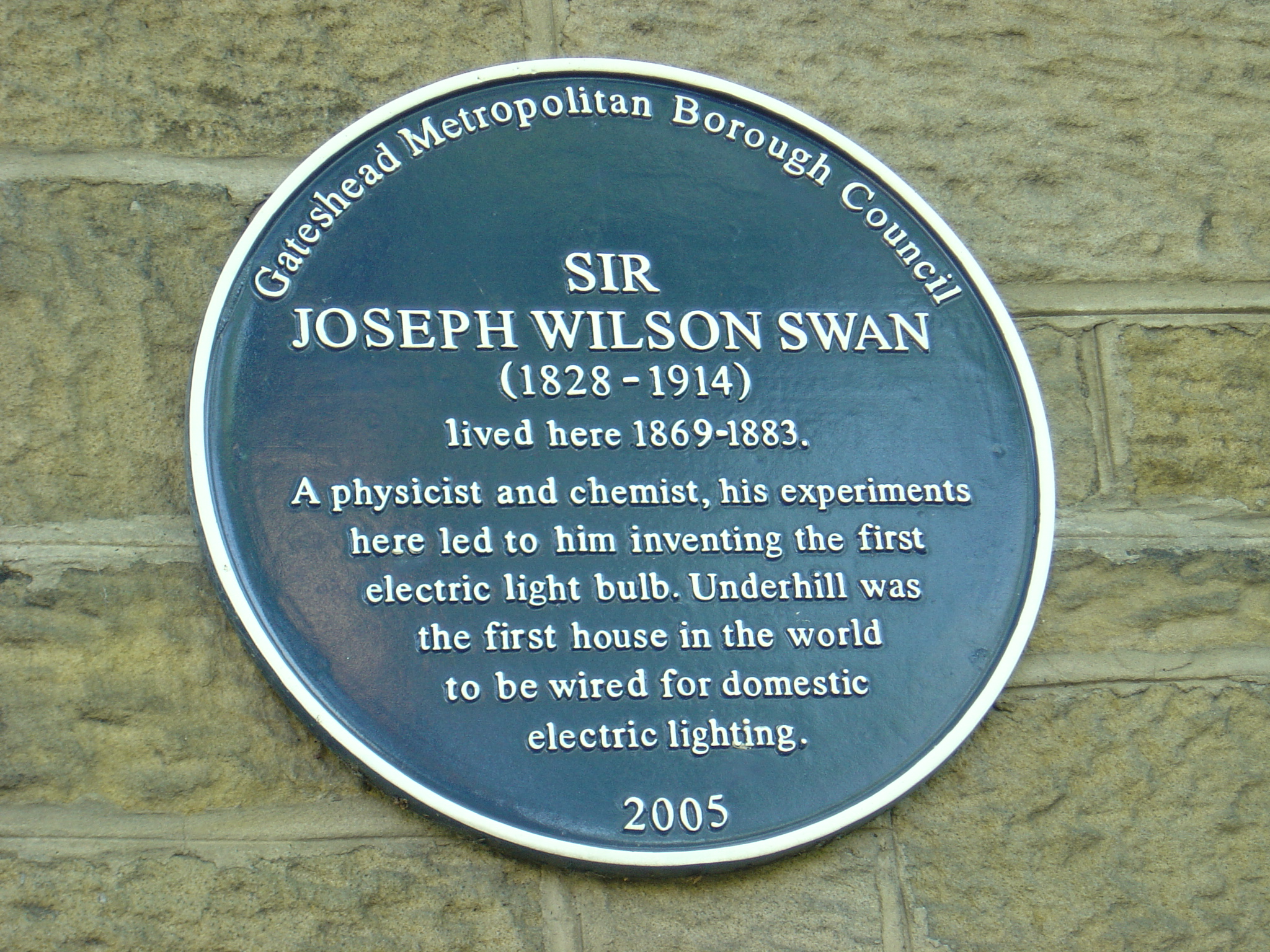
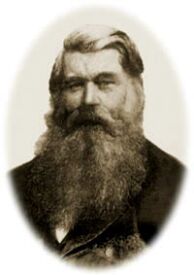
1878In 1878, Joseph Swan stands in his dimly lit workshop, carefully adjusting the delicate carbon filaments within a glass bulb. As he seals the last joint, a spark ignites his vision of illuminating homes and streets, casting away the shadows of the gaslight era. The air hums with anticipation as he prepares to unveil a revolution in artificial light.
Wikimedia Commons
World context
Dec 18, 1878On December 18, 1878, Joseph Swan stands before the members of the Newcastle Chemical Society, a slender carbon rod glowing brilliantly in his hand. The room buzzes with excitement as he demonstrates his revolutionary lamp, illuminating the darkened hall and sparking visions of a brighter future. The flickering light dances across the faces of the captivated audience, marking a pivotal moment in the dawn of electric illumination.
World context
Jan 17, 1879On January 17, 1879, Joseph Swan stands before an eager crowd in Newcastle, the flickering glow of his incandescent lamp illuminating the dim room. With a steady hand, he adjusts the carbon filament, and the room erupts in applause as the light burns brightly, a beacon of innovation that promises to transform the world. The air buzzes with excitement, the future of electric lighting hanging in the balance.
World context
Feb 3, 1879On February 3, 1879, Joseph Swan stands before 700 attendees at the Literary and Philosophical Society of Newcastle upon Tyne, his heart racing with anticipation. As he unveils his incandescent lamps, the room fills with a warm, inviting glow, illuminating the faces of captivated spectators who marvel at this revolutionary leap in lighting technology. The air buzzes with excitement, a palpable sense of the future dawning before their eyes.
AI-illustrated · Chronos
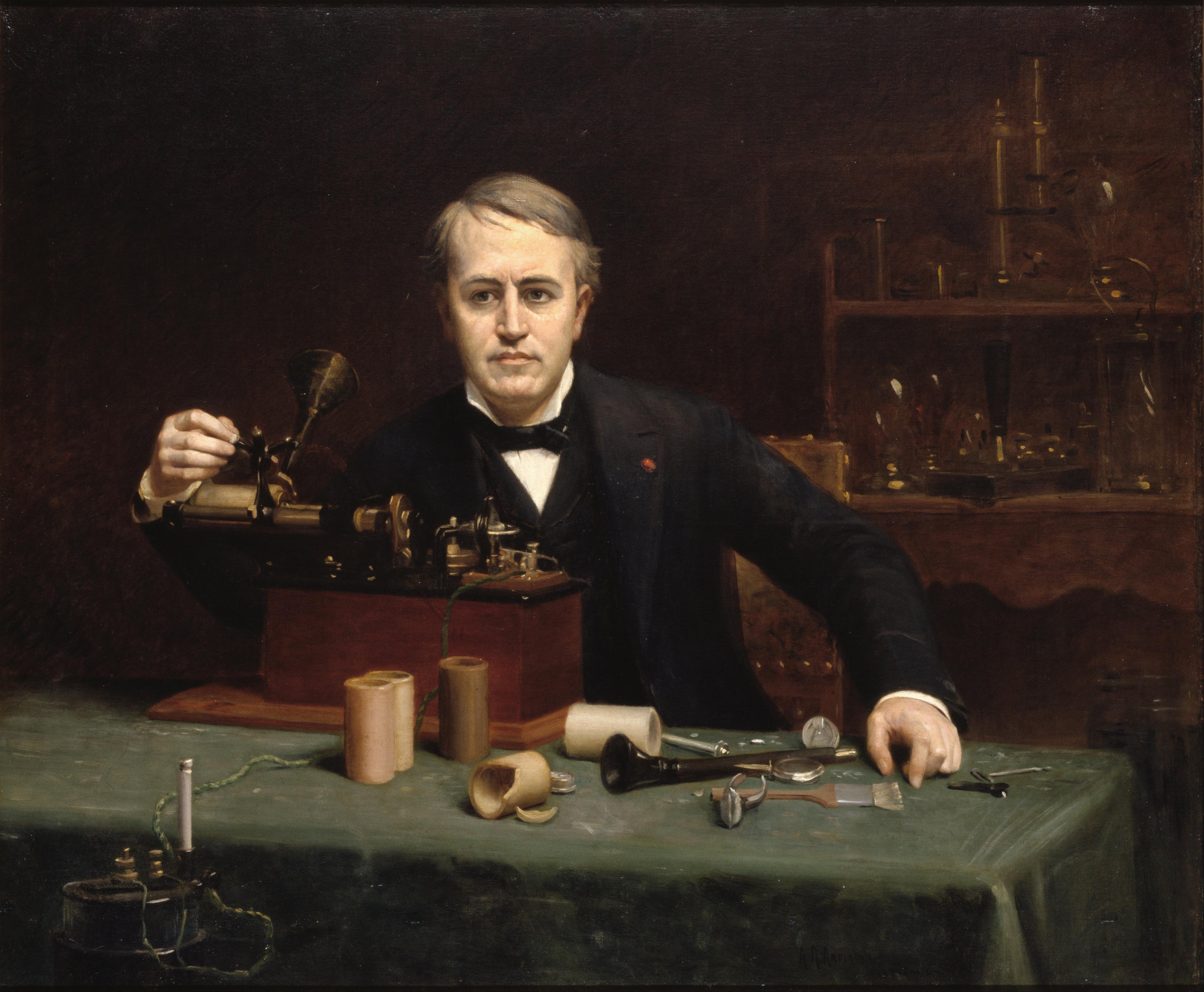
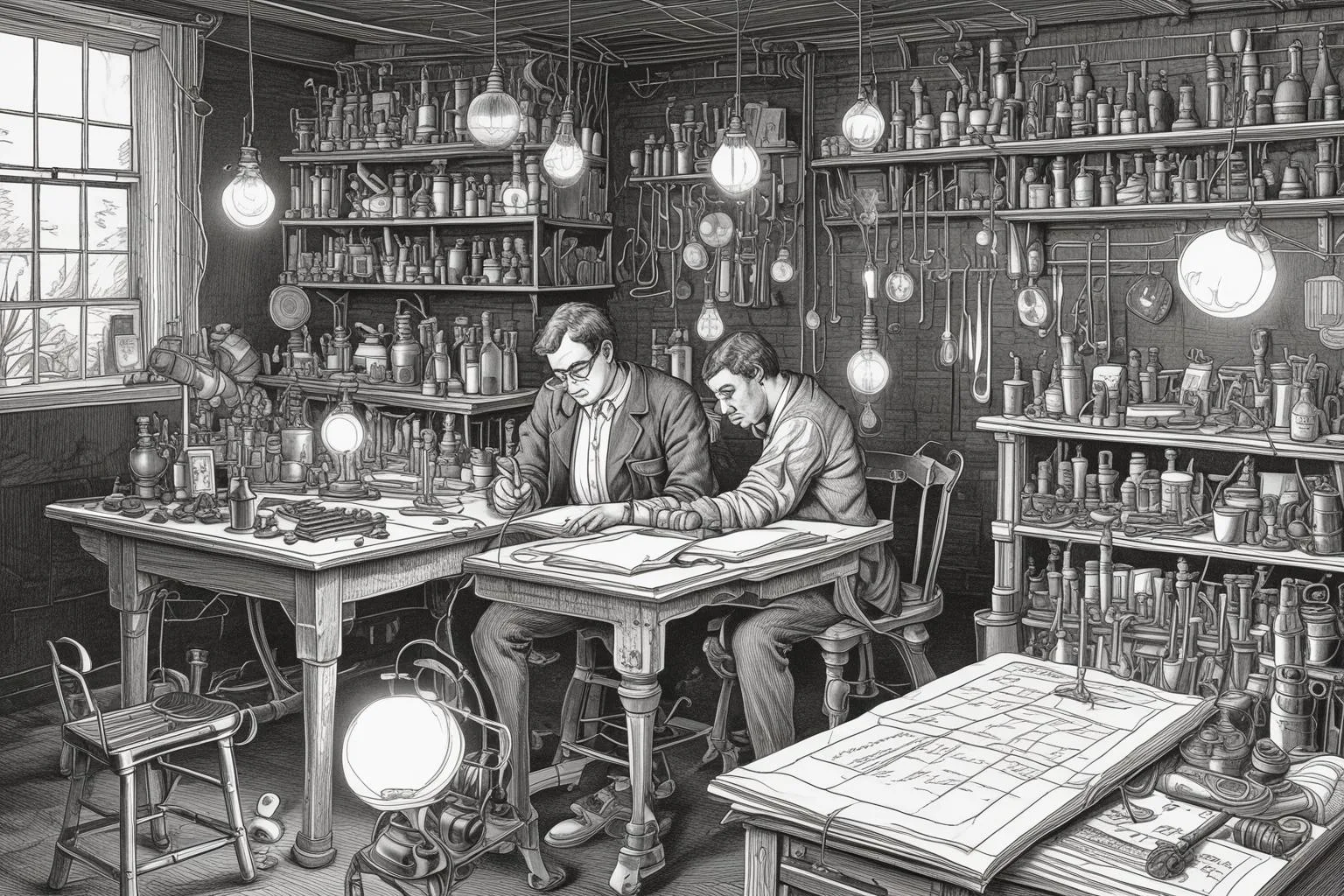
On October 14, 1879, Thomas Edison sits at his cluttered workbench in Menlo Park, New Jersey, his brow furrowed in concentration as he meticulously fills out the patent application for his revolutionary 'Improvement in Electric Lights.' The air is thick with the scent of heated metal and ambition, as he envisions a world illuminated by his incandescent bulb, a stark contrast to the flickering flames of gas lamps that dominate the streets. Each stroke of his pen brings him closer to transforming the very fabric of daily life.
AI-reconstructed · Chronos
Loading…
Sign in to join the discussion.

Wikimedia Commons
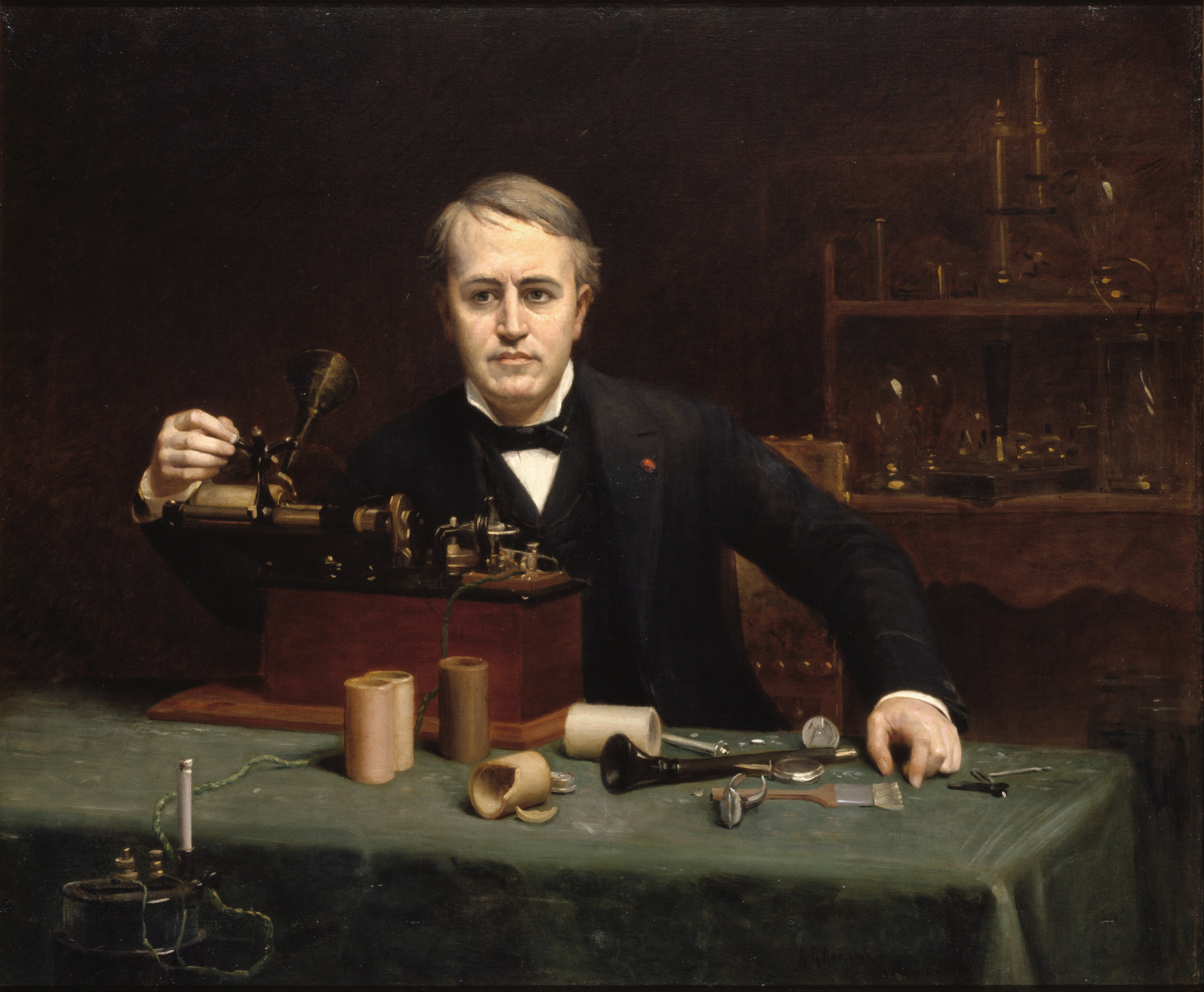
On October 22, 1879, in a dimly lit workshop in Menlo Park, New Jersey, Thomas Edison watches intently as his carbon filament lamp glows steadily for 13.5 hours. The soft, warm light fills the room, illuminating the faces of his eager assistants, who marvel at the breakthrough that promises to transform the world. With each passing hour, the flickering shadows of the past fade, giving way to a bright new era of electric illumination.
AI-reconstructed · Chronos
Loading…
Sign in to join the discussion.
Wikimedia Commons
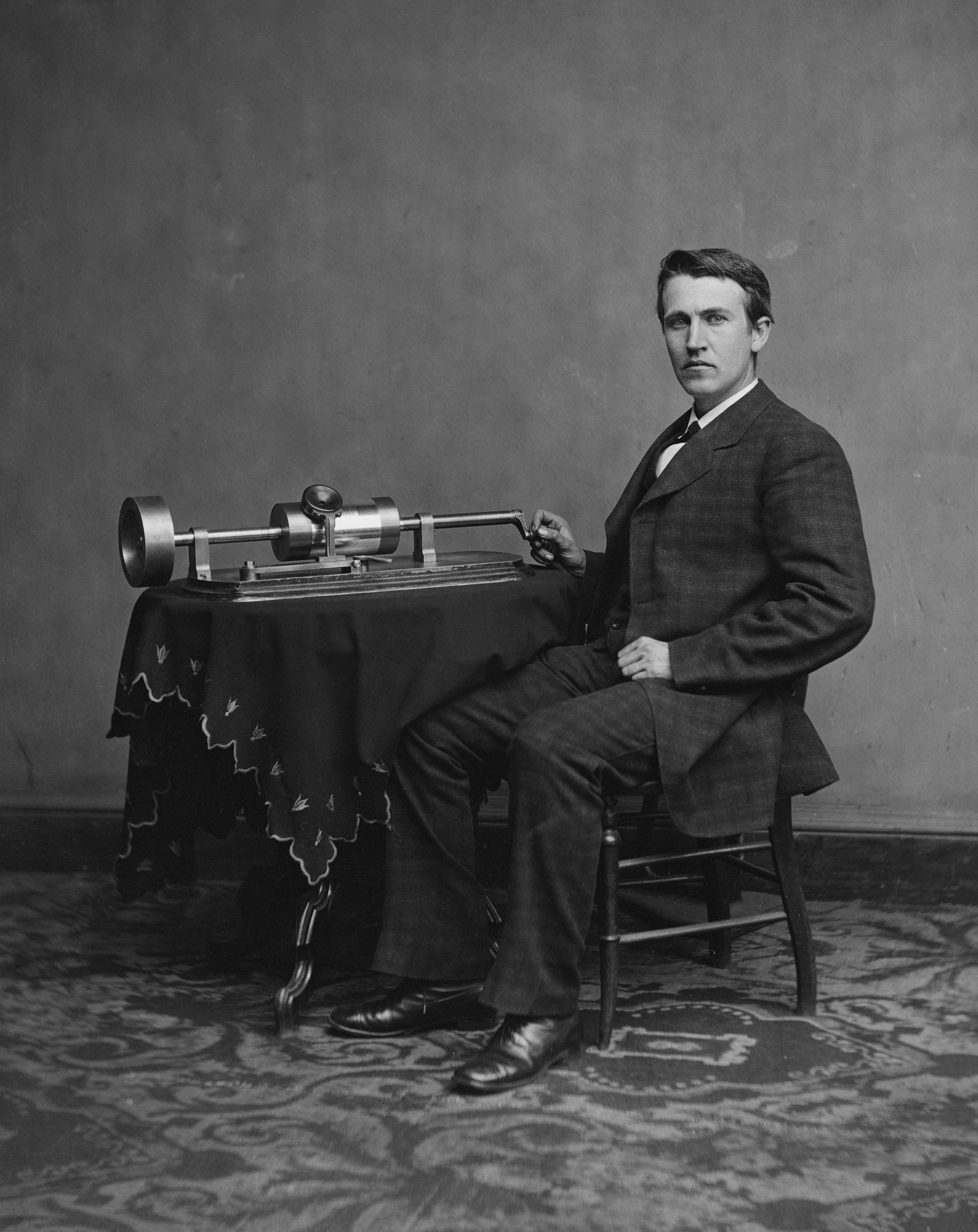
On November 4, 1879, Thomas Edison stands in his Menlo Park laboratory, the air thick with anticipation as he carefully files for a patent on his revolutionary electric lamp. The flicker of a carbon filament glows faintly in the dim light, illuminating the possibilities of a world transformed by electricity. This moment marks a pivotal turn in engineering, as Edison’s vision begins to take shape, promising to banish darkness from homes and streets alike.
AI-reconstructed · Chronos
Loading…
Sign in to join the discussion.
Wikipedia / Wikimedia Commons
In 1880, the Columbia, a steamer of the Oregon Railroad and Navigation Company, glides through the dark waters of the Columbia River, its decks illuminated by the soft glow of Thomas Edison’s incandescent electric lamps. Crew members marvel at the stark contrast to the flickering gaslights of yesteryear, as the promise of a new era in lighting casts a warm, steady light across the vessel. The hum of innovation fills the air, signaling a transformative moment in engineering and maritime history.
AI-reconstructed · Chronos
Loading…
Sign in to join the discussion.